
Chewy: Pet Shopping & Delivery
Chewy, Inc.Shopping
4.894.36K Reviews
- Version
- 26.43.0
- Installs
- 10.00M
- Age Rating
- Everyone
Screenshots






Our Review of Chewy: Pet Shopping & Delivery
 Analysis by Appyee
I downloaded Chewy: Pet Shopping & Delivery expecting a straightforward way to restock pet supplies, and that is exactly where it makes the strongest impression. It is a free shopping app from Chewy, Inc. for Android, focused on pet food, pharmacy items, toys, apparel, and other everyday care products. I found it most useful when I already knew what my pet needed and wanted to reorder without making another trip to a store.
The app is available to everyone, and its broad catalog makes it relevant to owners of dogs, cats, and other household pets. My experience was less about browsing for entertainment and more about reducing small errands: finding a familiar food, checking related care products, or putting several necessities into one order. That practical focus is also the key to deciding whether it deserves space on your phone.
How Chewy fits into everyday pet shopping
Chewy works as a mobile storefront rather than a pet-care encyclopedia. I can open it with a specific task in mind, search for a product, compare the available choices, and move toward checkout. The categories are broad enough to cover routine feeding, play, clothing, and pharmacy-related shopping, so I do not need a separate app for every type of pet purchase.
That range is valuable when a household has several recurring needs. For example, I might be replacing food while also looking for a toy and checking an item connected with a pet’s health routine. Keeping those searches in one place is easier than visiting a supermarket for food, a specialist pet shop for accessories, and a separate pharmacy for care products.
I also like that the app is useful for both planned and urgent-but-not-emergency shopping. A planned order could involve comparing familiar products before the current supply runs out. A more pressing situation might be discovering that a favorite toy has worn out or that a pet needs a replacement accessory. The app can help organize that shopping, although I would not treat an online order as a substitute for immediate veterinary care or a local store when timing is critical.
What the free download actually gives you
The app itself costs nothing to download, which makes trying it low risk. That is the clearest verified cost advantage: you can install and browse the shopping experience without paying an app fee. The products you choose are a separate matter, so I would judge the overall value by the convenience and selection the app provides rather than assuming that using it makes every purchase cheaper.
This distinction matters because a free shopping app can still lead to ordinary spending on food, supplies, or care items. I would compare the final order with the price at a nearby retailer, especially for bulky food or products I can easily buy during a normal grocery trip. Chewy is most persuasive when the time saved, product availability, or ability to combine categories matters more than finding the absolute lowest price for one item.
I would also check the order details carefully before paying. Product prices, delivery conditions, and any other checkout terms can affect the real value of a purchase, and those details are more important than the fact that the application itself is free. The app lowers the barrier to shopping; it does not remove the need to make a sensible buying decision.
Where the app delivers real value
The strongest benefit is consolidation. A pet owner can use one shopping environment for food, toys, apparel, and pharmacy-related needs instead of keeping several retailers in mind. I found that especially helpful when preparing a larger restock, because I could think in terms of the pet’s complete routine rather than remembering separate errands.
Search is also more useful when I approach it with a clear product description. Instead of entering a vague word such as “food,” I would search by the pet’s species, life stage, dietary requirement, or the exact product name I already use. That reduces the chance of choosing something that looks similar but is unsuitable. For health-related products, I would be even more deliberate and verify the label and instructions rather than relying on a thumbnail or a short product title.
A less obvious advantage is the way the app can support household planning. If more than one person cares for the same pet, a shared shopping routine can reduce duplicate purchases and forgotten essentials. I would use the app to build a deliberate basket, review quantities, and remove impulse items before checkout. That workflow is more valuable than simply opening the app whenever I feel like browsing.
Another useful habit is separating “must replace” items from “nice to have” items. Food and routine care products belong in the first group; an extra toy or seasonal accessory may belong in the second. Reviewing the basket this way helps me see whether the convenience of online shopping is encouraging unnecessary additions. The application makes shopping easier, but a little discipline keeps that convenience from becoming wasteful spending.
A realistic weekly shopping routine
Imagine I notice on a Sunday evening that my dog’s food supply is getting low, while a favorite chew toy is no longer usable. I would open the app, search for the familiar food rather than browsing every brand, add the replacement toy, and then review the basket for duplicate or unsuitable items. Before placing the order, I would confirm the product details and delivery information, then decide whether the timing works for the remaining food at home.
That scenario shows both the strength and the limitation of the service. It is convenient because two different pet needs can be handled in one session. It is less suitable if I have waited until the last meal and need supplies immediately. In that case, a local pet shop or supermarket may be the better option, even if the online catalog is more comfortable to browse.
For a multi-pet household, I would take the same approach but organize the basket by animal. That makes it easier to notice whether one pet’s food has been confused with another’s and whether an accessory is the right size. I would not assume that a large catalog automatically prevents mistakes; careful checking still matters, particularly when products have similar packaging.
Pharmacy shopping needs extra attention
The inclusion of pharmacy products makes the app more useful than a basic food-and-toy retailer, but it also raises the standard for careful use. I would treat medication and health-related purchases as a verification task, not a casual browsing task. The pet’s exact needs, the product instructions, and any advice from a veterinarian should guide the decision.
This is one area where a local professional can be better. If I need to ask questions, explain symptoms, or confirm whether two treatments can be used together, a veterinary clinic or pharmacist offers a more appropriate conversation. The app may simplify the purchase of a product I already understand, but it should not be the place where I diagnose a pet or replace professional guidance.
I would also avoid using a familiar-looking package as proof that an item is correct. Different strengths, formats, and intended uses can appear very similar on a small screen. My practical tip is to slow down for health products, read the full product information available in the listing, and compare it with the recommendation I was given. Convenience is helpful only when it does not encourage a rushed choice.
Where the experience can feel less convenient
The catalog’s breadth can create its own friction. A large selection is helpful when I am comparing options, but it can also make a simple purchase feel like a long decision. If I already know the exact food or accessory I want, searching by precise terms is better than exploring broad categories. Otherwise, I can spend time looking at products that are close to what I need but not actually right.
Online shopping also removes some of the immediate reassurance of a physical store. I cannot inspect a toy’s material in person, judge the true size of an apparel item by holding it, or see whether a package is damaged before purchase. Product descriptions and images help, but they do not fully replace handling an item. For fit-sensitive products, I would pay close attention to measurements and return-related details before committing.
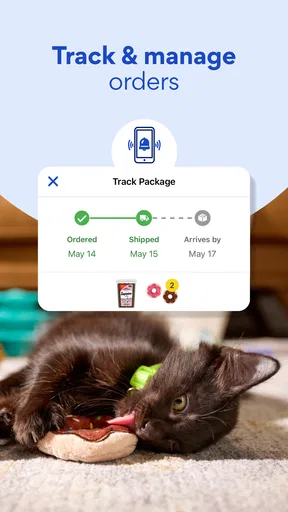
Delivery introduces another trade-off. The app is designed around ordering rather than taking an item home immediately, so it suits planned replenishment better than last-minute needs. Heavy food can be easier to arrange through delivery, but I would still consider timing and the practical cost of waiting. If my pet’s supply is nearly exhausted, convenience becomes less important than availability today.
There is also a temptation to treat a single retailer as the answer to every pet purchase. I would resist that habit. Local stores can be better for urgent items, for seeing products in person, or for supporting a shop where staff know the local pet community. Chewy is more compelling when the product range and at-home ordering solve a problem that a nearby store does not solve as easily.
How it compares with ordinary alternatives
Compared with a supermarket, Chewy is more focused on pet-specific shopping. A supermarket may be faster for a basic food purchase during a normal grocery run, but it usually does not provide the same pet-centered range across toys, apparel, and pharmacy items. I would choose the supermarket when speed and convenience on an existing trip matter most, and use Chewy when I need a more dedicated selection.
Compared with a local pet shop, the app offers the comfort of shopping from home and combining several types of products in one basket. The local shop wins when I need advice, immediate pickup, or the ability to examine an item. For a new pet owner still learning about sizes, materials, or suitable routines, that personal interaction can be more valuable than a larger digital catalog.
Compared with visiting a veterinary practice for health-related products, the app is better viewed as a purchasing channel for an already understood need, not as a source of diagnosis. A clinic remains the right choice for medical judgment. That boundary is important, and it is one of the reasons I would recommend using the pharmacy area thoughtfully rather than treating it like an ordinary accessories section.
Who will get the most from it
I think the app is a strong fit for pet owners who regularly reorder familiar products and prefer to manage shopping from a phone. It is also useful for households that buy across several categories, because food, toys, apparel, and pharmacy items can be considered in the same shopping session. Owners caring for multiple pets may appreciate the ability to plan one consolidated order instead of making several unrelated trips.
It is a particularly sensible choice for people who dislike carrying bulky supplies or who live far from a well-stocked pet store. The value comes from reducing effort and organizing purchases, not from a guaranteed lower total. I would install it if I wanted a dedicated pet-shopping destination and was comfortable checking delivery timing and checkout details before ordering.
The app is less convincing for someone who buys only a small item occasionally and already passes a suitable store every week. It may also be the wrong choice for a person who needs extensive advice before selecting food, medication, or equipment. In those cases, a veterinarian, knowledgeable local retailer, or in-person fitting may provide more useful help than a mobile catalog.
Device and app details in practical terms
Chewy, Inc. released the app on December 1, 2016, and the current version is 26.31.1. It supports Android 7.0 and later, so it remains accessible on many older Android phones rather than requiring a recent device. That is worth noting if I am installing it on a spare phone used for household shopping.
The app has reached over ten million installs, with an average rating of 4.8 from around 663 thousand ratings and roughly 92 thousand written reviews. Those figures suggest that it has broad adoption and that many users find the experience satisfactory, although they do not guarantee that every product search or delivery situation will work equally well for me.
Its Everyone age classification also matches the straightforward nature of the shopping task. I would still expect an adult to handle decisions involving medication, dietary restrictions, payment, and delivery instructions. The age label describes access to the app, not the level of judgment needed for every purchase made through it.
My buy-or-skip verdict
After using it as a practical shopping tool, I would recommend Chewy: Pet Shopping & Delivery to someone who wants a dedicated place to plan pet-supply orders and values convenience over the possibility of finding one item cheaper elsewhere. The free app is easy to try, and its coverage of food, pharmacy products, toys, apparel, and related care needs gives it a clear purpose.
I would not promise that it is the best option for every purchase. Check the final cost, confirm that delivery timing matches the amount of food or supplies at home, and slow down when choosing health products or size-sensitive items. For urgent needs, personal advice, or a product I want to inspect immediately, a local store or veterinary professional can be the better choice.
My final judgment is simple: install it if recurring pet shopping is a chore you would like to organize from your phone. Skip it if you already have a convenient local routine, need immediate purchases, or expect an app to replace expert advice. The real value is controlled convenience, not automatic savings, and that makes it a worthwhile free shopping companion when used with a careful eye on the basket and the checkout.
Privacy and Permissions
See what permissions an app requests and how it handles your data.
- Camera
- take pictures and videos
- Microphone
- record audio
- Wi-Fi connection information
- view Wi-Fi connections
- Other
- view network connections, pair with Bluetooth devices, full network access, change your audio settings, run at startup, reorder running apps, control vibration, prevent device from sleeping
Verdict
Strengths of Chewy: Pet Shopping & Delivery
- Wide selection of pet food, treats, toys, and healthcare products
- Convenient autoship options help maintain regular delivery schedules
- Helpful customer service with a strong satisfaction-focused reputation
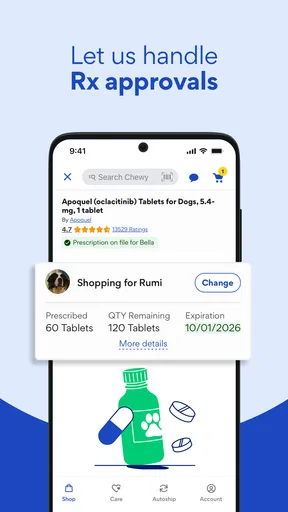
- Prescription pet medications can be ordered through the app
- Product reviews make it easier to compare items before buying
Limitations of Chewy: Pet Shopping & Delivery
- Prices may be higher than some local stores or competing retailers
- Delivery speed can vary depending on product availability and location
- Autoship changes require attention to avoid unwanted recurring orders
- Some prescription items may require veterinarian approval before shipping
- Large product selection can make browsing feel overwhelming at times
Similar Picks in This Category
View All
SHEIN-Shopping Online
Roadget Business PTE. LTD.4.8

Amazon Shopping
Amazon Mobile LLC4.4


Mercado Libre: Compras online
Mercado Libre4.8

Wish: Shop and Save
Wish US Holdings LLC4.7

Alibaba.com - B2B marketplace
Alibaba Mobile4.4
Frequently Asked Questions
What is Chewy: Pet Shopping & Delivery used for?
Chewy is an online pet-shopping app for ordering food, treats, toys, medications, accessories, and other supplies for dogs, cats, birds, fish, reptiles, and small pets. After installing it, you can browse by pet or product category, compare brands, save items for later, and place orders for delivery directly from your phone. Availability and product selection may depend on your location.
Can I order prescription pet medications through the Chewy app?
Yes, Chewy supports many prescription and veterinary diet products, although a valid prescription or approval from your veterinarian may be required. During checkout, the app can guide you through submitting prescription details or contacting your veterinary clinic for authorization. Medication availability, shipping rules, refill options, and delivery times can vary, so review the requirements carefully before completing the purchase.
Does Chewy offer autoship or recurring deliveries?
Chewy includes an Autoship option for products you purchase regularly, such as dry food, litter, treats, supplements, and some medications. You can generally choose the delivery frequency and manage upcoming shipments through your account. Before confirming, check the selected schedule, price, and quantity, because recurring orders may continue until you edit or cancel them and product prices can change.
How do returns, refunds, and customer support work in Chewy?
Chewy is known for providing customer support through the app and other contact channels, while eligible products can usually be returned according to the company’s current policy. If an item arrives damaged, incorrect, or unsuitable, open your order details and follow the available support or return instructions. Policies may differ for prescriptions, pharmacy products, personalized items, and certain consumables.
Is Chewy available everywhere, and what should I check before downloading it?
Chewy primarily serves customers in the United States, so the app may not provide the same shopping or delivery service in other countries. Before downloading, check whether your address is supported, whether the app is compatible with your Android or iOS device, and whether delivery fees, minimum order requirements, and estimated shipping times apply. You will also need an account to place orders.
